This is How Sufficiency
Works in Business
Practical approaches for achieving greater impact with fewer resources.
Purposeful business, working more resource-efficiently
Many companies are already considering new ways of conducting business: slower, more regional, and more socially just. However, there is still little knowledge about how widespread such strategies are, how well they perform economically, and what factors might still be holding them back. This website builds on the findings of the research project “Economics of Sufficiency” and provides clear recommendations and information for implementing it in business.
How well do you already know sufficiency and sufficiency-oriented business? Test your knowledge in our Myth Check!
What Is Sufficiency-Oriented Business?
To achieve the global sustainability goals, fundamental changes in production and consumption are necessary. The so-called sufficiency strategy aims to reduce overall resource use—thereby making a central contribution to socio-ecological transformation.
Sufficiency therefore means: living well with fewer material resources.
Not through renunciation, but through new priorities—more time, more care, more common good. Companies play a crucial role in this regard: they shape production processes, influence consumer habits, and set economic paradigms—not only out of responsibility, but also because it makes economic sense.
The Challenge
Despite growing interest, there is still a lack of robust knowledge about how widespread such business models are, how economically viable they prove to be—and how they can become more firmly rooted in society. How, then, can sufficiency actually be put into practice in the everyday operations of companies?
Why Companies Embrace Sufficiency
An increasing number of companies are aligning their activities with sufficiency—and for good reasons:
99% of surveyed companies state that they wish to take on social responsibility by doing so, 70% respond to customer demands, and 60% respond to expectations from internal stakeholders.
Our survey results are clear:
Sufficiency-oriented business does not only bring only ecological benefits—it also strengthens reputation, customer proximity, and economic stability.

Strengthening reputation
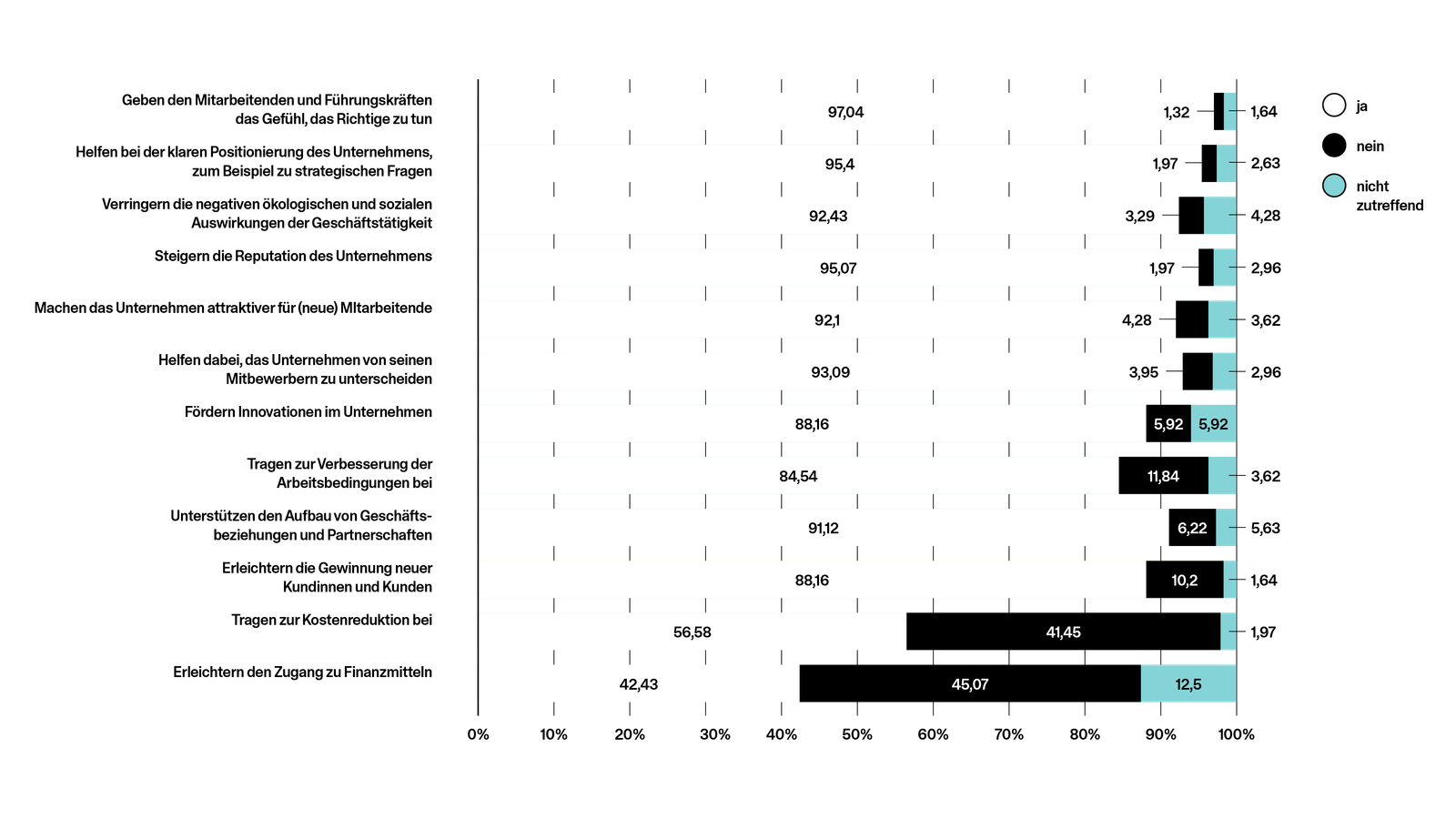
95% of surveyed companies report a clear improvement in their public image.

Attracting new customers
88% say that sufficiency-oriented business helps them reach new target groups.

Reducing costs
More than half (56%) also see economic benefits—for example, through resource efficiency.
The following chart shows the additional benefits that sufficiency in business can bring:
And What About Growth?
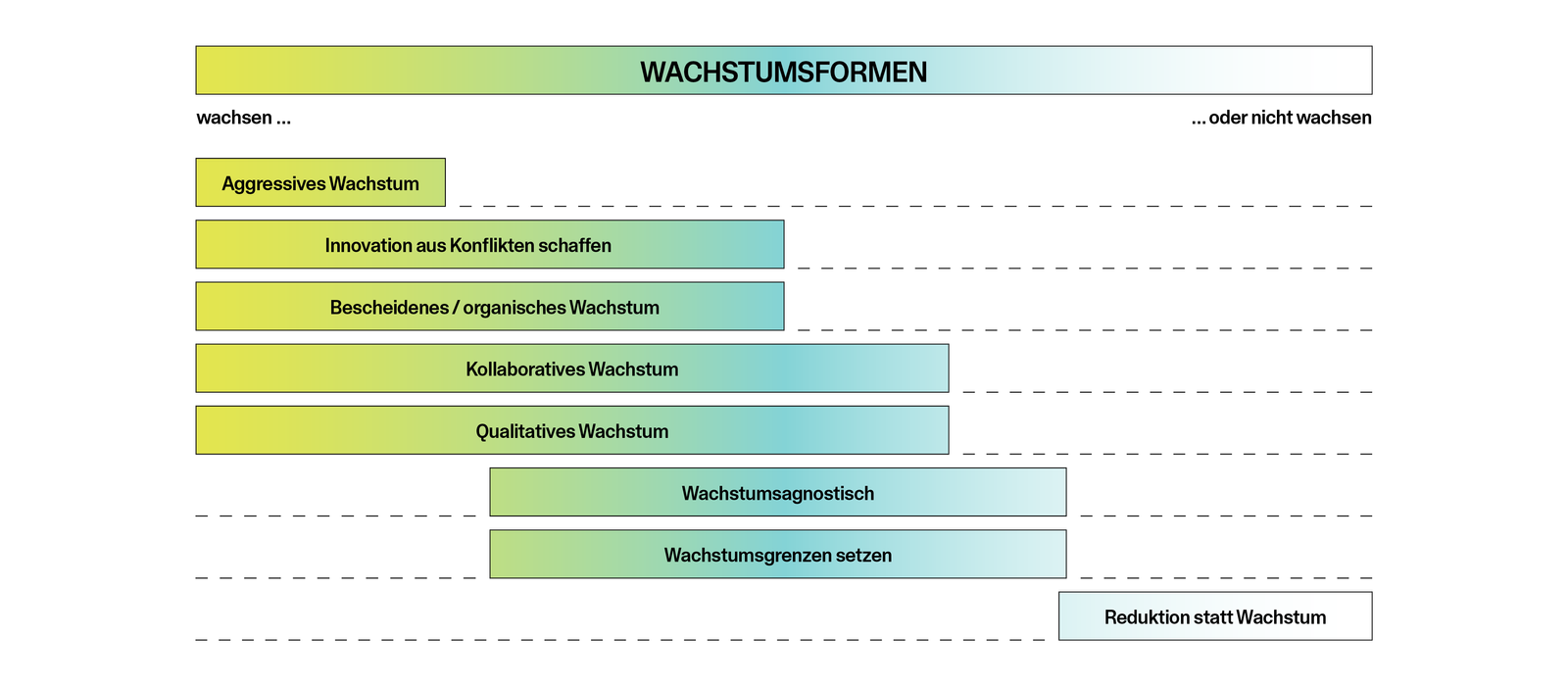
Growth and sufficiency—do they even fit together? At first glance, this may seem like a contradiction. Our research shows that sufficiency-oriented companies take very different approaches to growth.
Sufficiency-oriented business does not mean “excluding growth”—but rather reassessing it and shaping it deliberately.
81 %
consciously pursue moderate, sustainable growth.
62 %
even aim for aggressive growth, in order to push non-sustainable offerings out of the market and make their alternatives more visible.
25 %
state clearly: “We will not grow further”—and intentionally cap their revenues.
To grow or not to grow? The answer to this question is often not so black and white—the following graphic shows different types of growth:
SOURCE
Niessen , L., Gossen, M., Beyeler, L., Strobel, H., & Königs, J. (2025). How to Survive in a Growth-Oriented Economy: Findings of a Semi-Systematic Literature Review on the Role of Growth for Sufficiency-Oriented Businesses. Journal of Business and Economic Ethics (zfwu), 26(2), 234-267.
How Can We Scale Sufficiency-Oriented Business?
Few get far on their own. To bring sufficiency into the mainstream, many companies rely on collaboration. 86% of surveyed firms state that they actively network with others—with sustainable enterprises, organizations, associations, or initiatives. Cooperation instead of competition is often the key—to greater visibility, greater impact, and stronger societal transformation.
Can you imagine taking action to help scale sufficiency-oriented business? Our checklist supports you in implementing sufficiency approaches in your own company.
Key Insights at a Glance
Here’s a concise summary of the project’s central conclusions:
Sufficiency pays off - also for companies.
It is not only about conviction: sufficiency offers tangible and measurable advantages for businesses.
You can’t do it alone.
Cooperation, trust, and shared goals make companies stronger—especially in an environment shaped by competition and growth logic.
Sufficiency-oriented companies face limits.
They show that new framework conditions are necessary. Further research is needed to explore and develop future conditions that support sufficiency.
Strength comes from within.
Corporate culture, staff engagement, creativity, and pragmatism help to reconcile conflicts between profitability and sustainability—even under challenging conditions.
How do we measure success?
Clear indicators for sufficiency strategies are still lacking. This makes steering and communication more difficult. At present, many companies use carbon accounting to measure sufficiency. Further research could identify new indicators.
Sufficiency and growth are not mutually exclusive.
Growth sometimes feels like a paradox to sufficiency. Our research shows that sufficiency-oriented businesses can grow, but they offer different answers to this question.
Thinking Sufficiency-Oriented Business Further
Sufficiency-oriented business is possible—and we now know more about how it works. Our project shows: companies that take responsibility do not only trust, but also clarity, stability, and impact.
If you want to explore the topic in greater depth, the free book “Sufficiency in Business” provides sound knowledge, practice-oriented analyses, and numerous examples. Discover further inspiring business cases in the “Business for Sufficiency” Database.
Sufficiency is strongest when it is pursued and lived collectively. For example, in networks such as the Economy for the Common Good, dasselbe in grün e.V., or the German Sustainable Business Association (BNW).
Whether it is a first step or a strategic transformation—sufficiency begins with the decision to rethink business. Use our findings and make a difference in your company.
Want to get started right away? The checklist “Bringing Sufficiency into Your Own Company” offers practical inspiration—as a downloadable PDF.

This is How Sufficiency
Works in Business
Practical approaches for achieving greater impact with fewer resources.
Purposeful business, working more resource-efficiently
Many companies are already considering new ways of conducting business: slower, more regional, and more socially just. However, there is still little knowledge about how widespread such strategies are, how well they perform economically, and what factors might still be holding them back. This website builds on the findings of the research project “Economics of Sufficiency” and provides clear recommendations and information for implementing it in business.
How well do you already know sufficiency and sufficiency-oriented business? Test your knowledge in our Myth Check!
What Is Sufficiency-Oriented Business?
To achieve the global sustainability goals, fundamental changes in production and consumption are necessary. The so-called sufficiency strategy aims to reduce overall resource use—thereby making a central contribution to socio-ecological transformation.
Sufficiency therefore means: living well with fewer material resources.
Not through renunciation, but through new priorities—more time, more care, more common good. Companies play a crucial role in this regard: they shape production processes, influence consumer habits, and set economic paradigms—not only out of responsibility, but also because it makes economic sense.
The Challenge
Despite growing interest, there is still a lack of robust knowledge about how widespread such business models are, how economically viable they prove to be—and how they can become more firmly rooted in society. How, then, can sufficiency actually be put into practice in the everyday operations of companies?
Why Companies Embrace Sufficiency
An increasing number of companies are aligning their activities with sufficiency—and for good reasons:
99% of surveyed companies state that they wish to take on social responsibility by doing so, 70% respond to customer demands, and 60% respond to expectations from internal stakeholders.
Our survey results are clear:
Sufficiency-oriented business does not only bring only ecological benefits—it also strengthens reputation, customer proximity, and economic stability.
Strengthening reputation
95% of surveyed companies report a clear improvement in their public image.
Attracting new customers
88% say that sufficiency-oriented business helps them reach new target groups.
Reducing costs
More than half (56%) also see economic benefits—for example, through resource efficiency.
The following chart shows the additional benefits that sufficiency in business can bring:
And What About Growth?
Growth and sufficiency—do they even fit together? At first glance, this may seem like a contradiction. Our research shows that sufficiency-oriented companies take very different approaches to growth.
Sufficiency-oriented business does not mean “excluding growth”—but rather reassessing it and shaping it deliberately.
81 %
consciously pursue moderate, sustainable growth.
62 %
even aim for aggressive growth, in order to push non-sustainable offerings out of the market and make their alternatives more visible.
25 %
state clearly: “We will not grow further”—and intentionally cap their revenues.
To grow or not to grow? The answer to this question is often not so black and white—the following graphic shows different types of growth:
SOURCE
Niessen , L., Gossen, M., Beyeler, L., Strobel, H., & Königs, J. (2025). How to Survive in a Growth-Oriented Economy: Findings of a Semi-Systematic Literature Review on the Role of Growth for Sufficiency-Oriented Businesses. Journal of Business and Economic Ethics (zfwu), 26(2), 234-267.
How Can We Scale Sufficiency-Oriented Business?
Few get far on their own. To bring sufficiency into the mainstream, many companies rely on collaboration. 86% of surveyed firms state that they actively network with others—with sustainable enterprises, organizations, associations, or initiatives. Cooperation instead of competition is often the key—to greater visibility, greater impact, and stronger societal transformation.
Can you imagine taking action to help scale sufficiency-oriented business? Our checklist supports you in implementing sufficiency approaches in your own company.
Key Insights at a Glance
Here’s a concise summary of the project’s central conclusions:
Sufficiency pays off - also for companies.
It is not only about conviction: sufficiency offers tangible and measurable advantages for businesses.
You can’t do it alone.
Cooperation, trust, and shared goals make companies stronger—especially in an environment shaped by competition and growth logic.
Sufficiency-oriented companies face limits.
They show that new framework conditions are necessary. Further research is needed to explore and develop future conditions that support sufficiency.
Strength comes from within.
Corporate culture, staff engagement, creativity, and pragmatism help to reconcile conflicts between profitability and sustainability—even under challenging conditions.
How do we measure success?
Clear indicators for sufficiency strategies are still lacking. This makes steering and communication more difficult. At present, many companies use carbon accounting to measure sufficiency. Further research could identify new indicators.
Sufficiency and growth are not mutually exclusive.
Growth sometimes feels like a paradox to sufficiency. Our research shows that sufficiency-oriented businesses can grow, but they offer different answers to this question.
Thinking Sufficiency-Oriented Business Further
Sufficiency-oriented business is possible—and we now know more about how it works. Our project shows: companies that take responsibility do not only trust, but also clarity, stability, and impact.
If you want to explore the topic in greater depth, the free book “Sufficiency in Business” provides sound knowledge, practice-oriented analyses, and numerous examples. Discover further inspiring business cases in the “Business for Sufficiency” Database.
Sufficiency is strongest when it is pursued and lived collectively. For example, in networks such as the Economy for the Common Good, dasselbe in grün e.V., or the German Sustainable Business Association (BNW).
Whether it is a first step or a strategic transformation—sufficiency begins with the decision to rethink business. Use our findings and make a difference in your company.
Want to get started right away? The checklist “Bringing Sufficiency into Your Own Company” offers practical inspiration—as a downloadable PDF.
