Rymhart - With craftsmanship and attitude against disposable fashion
Rymhart is a knitwear manufacturer from Stade an der Elbe that specializes in robust, durable pullovers and knitwear products. The company stands for traditional craftsmanship, regional production and functional design. All pieces are produced locally - with a focus on durability, easy care and timeless design. Rymhart combines northern German craftsmanship with a clear commitment to quality and durability.
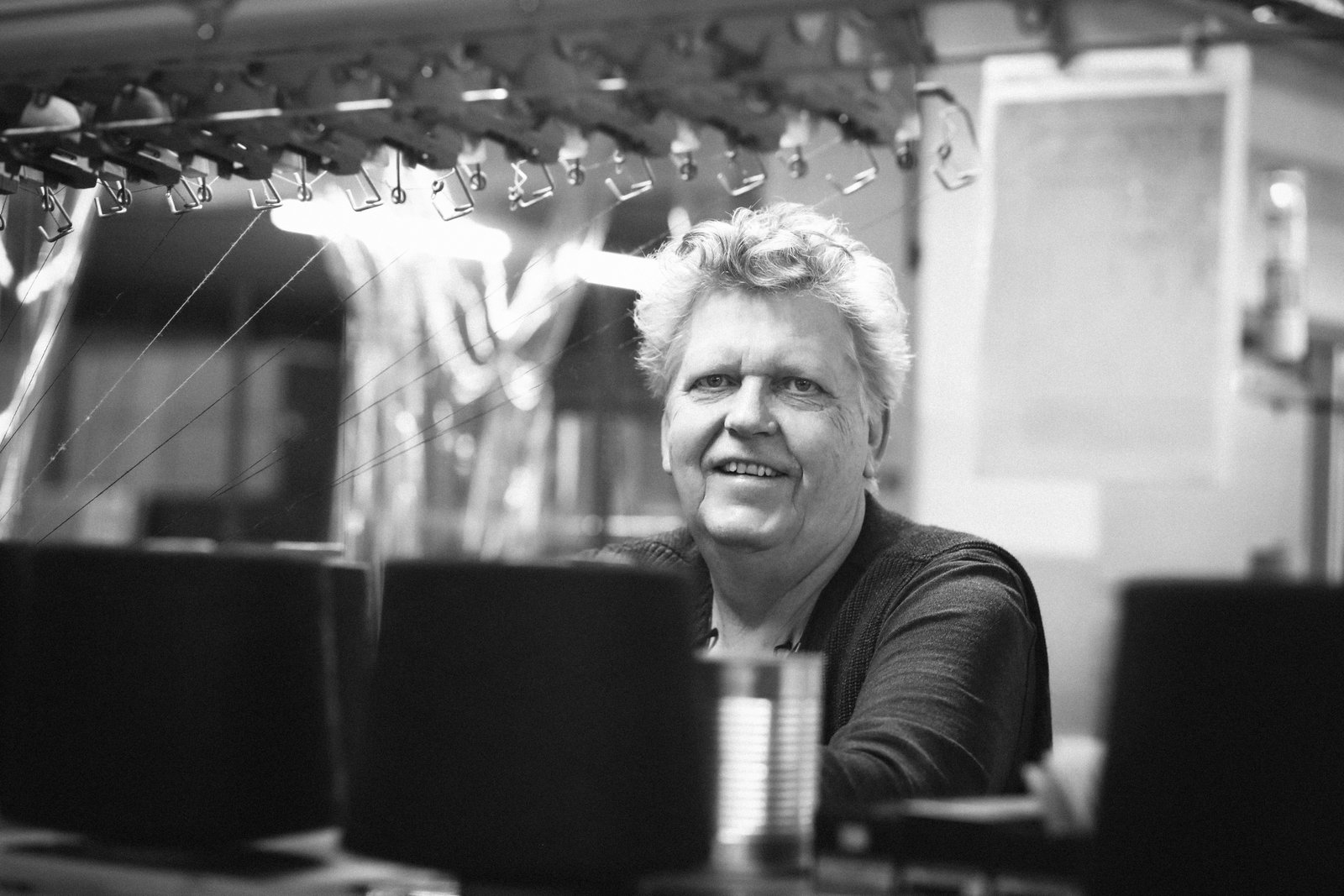
INTERVIEWER
What do you consider to be sufficiency-oriented economic activity?
Rymhart
For me, sufficiency-oriented management means using resources consciously and efficiently and only creating what people really need. If you ask yourself what that is - clothing, for example - then you quickly end up with the question of the right materials.
We chose wool because it is a natural, renewable raw material that can hardly be replaced. It fulfills a function that we lack in evolutionary terms - it protects, regulates the climate and even cares for the skin thanks to the lanolin. In a way, wool is what our own hair used to be - only better. And for us, this is precisely where the core of sufficiency-oriented management lies: using the obvious instead of constantly inventing something new.
INTERVIEWER
And what makes Rymhart a sufficiency-oriented company?
Rymhart
Our most important principle is: Don't throw anything away. That wasn't a management decision or an ideology - it just developed that way. At some point, we realized: we are practically zero waste, we no longer produce any waste.
In the past, in classic fashion production, we bought around 40 tons of yarn every year - but only 30 tons actually ended up in the sweaters. Today, we process everything, right down to the smallest scraps of yarn. This is used to create individual pieces such as baby sweaters or small accessories, which we sell once a year in a special promotion. This year there were 1,000 pieces, all made from leftovers - and they sold out immediately.
The best thing about it is that this idea didn't come from management, but from the team. The employees spontaneously started asking: Couldn't we do something else with this? This is how our zero waste approach came about - from common sense, creativity and the joy of work, not from a sustainability concept on paper. It may not be the most productive work, but it's fun for everyone because it allows creativity and creates meaning. The little bit that's left over goes into the felt, but nothing ends up in the bin.
"Our most important principle is: Don't throw anything away."
INTERVIEWER
What has your company gained by focusing on sufficiency?
Rymhart
First of all: that we still exist at all. We can continue working with 45 people - without causing any damage. We do things that are ecologically and morally justifiable, and that feels right.
Many people work in sectors where they would rather not look too closely. It's different for us: we can say that we are doing something worthwhile. Of course, it's also about income here - but in the background there's the good feeling of creating something positive. And that's worth a lot - for us, for our children, for society.
