be4energy GmbH – Driving forward the energy transition with smart technology
For around a decade, Berlin-based be4energy has been working to make energy supply decentralized, sustainable, and participatory. To this end, be4energy GmbH develops innovative hardware and software solutions that flexibly connect renewable energy systems to the power grid and the energy market.
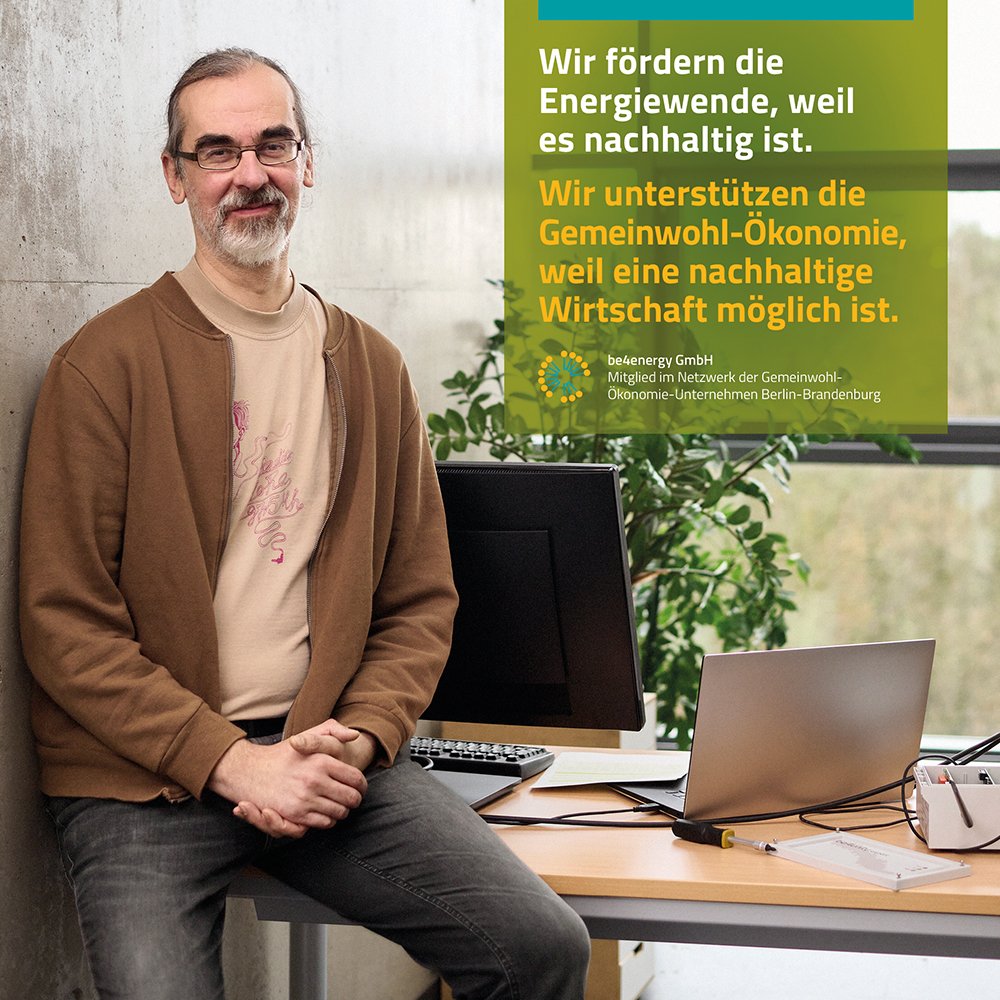
INTERVIEWER
What makes your company a sufficiency-oriented company?
b4energy
What makes your company a sufficiency-oriented company? We have given a lot of thought to the longevity of our products—especially when it comes to hardware. Our goal is to keep them in use for as long as possible. To achieve this, we focus on three things: Right from the design stage, we pay attention to robustness and industrial quality. Secondly, we offer repairs – if a device is defective, it can be sent in, we check it, replace defective components, and send it back. And thirdly, we take back old devices – not for scrapping, but for cannibalizing. We use parts that are still functional for repairs or to manufacture refurbished devices that are put back into circulation.
“Our goal is to keep them in service for as long as possible.”
INTERVIEWER
Was there a trigger or a specific event that prompted you to start implementing sufficiency measures?
B4energy
I would say that was part of our plan from the very beginning—it's in the company's DNA. We've been around for ten years now, and even back then, the founders had a clear stance: a little left-wing and green, as they say. We wanted to do something meaningful, and working with renewable energies in the green industry just felt right.
The economy for the common good led us to adopt a more systematic approach. Since then, we have been asking ourselves: How can we continuously develop and improve as a company?
INTERVIEWER
Final question. How has your company benefited from its focus on sufficiency? won?
B4energy
More exciting lunch breaks. From a business perspective, we actually had an advantage when it came to the issue of component unavailability. Like many others, we also had to contend with bottlenecks. But because we were able to repair, because we had good inventory management and were flexible, we were able to supply customers who couldn't get anything else anywhere else. This brought us new orders—not because we did everything better than others, but because our structures simply worked well at that moment. Of course, there were others who also came through this period well. But without our repair services and our forward-looking inventory strategy, it would definitely have been more difficult for us.
