werk.um architects – Sustainable building with wood and attitude
The architectural firm werk.um architekten from Darmstadt primarily designs and implements sustainable timber and timber module buildings such as schools, kindergartens, and residential projects. The architects focus on sufficiency, preservation of existing structures, and ecologically sound solutions. Werk.um works according to the maxim “Different – Better – Less.” Less technology, natural materials, simple and flexible buildings – this ensures robust, durable architecture with a low ecological footprint and high user comfort.
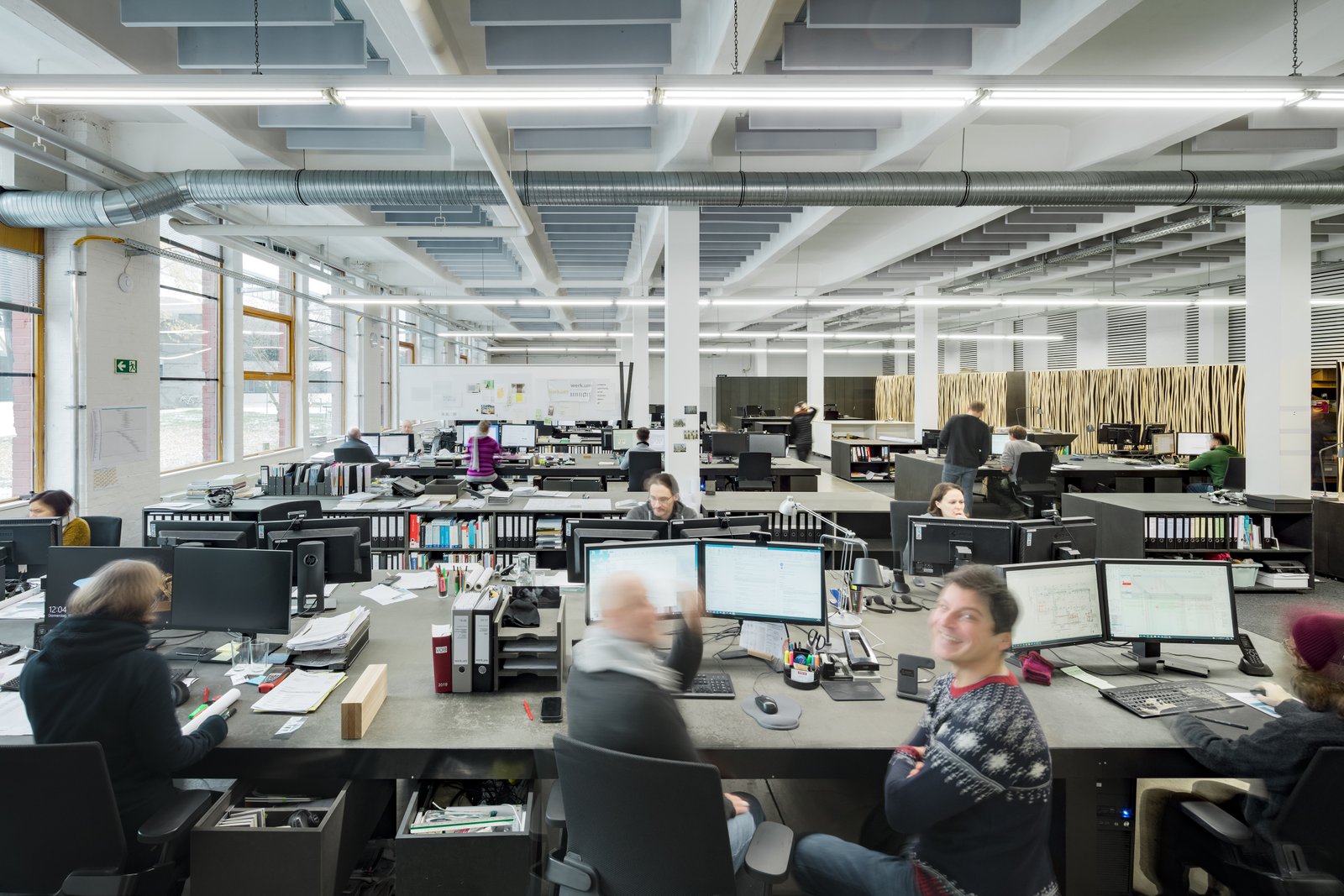
INTERVIEWER
What do you consider to be sufficiency-oriented economic activity?
wERK.UM
I believe that sufficiency ultimately only works in combination—that is, within a system. It is not enough to bring individual offers or products to market. Rather, an environment is needed that enables people to live sufficiently in the first place.
Let's take construction as an example: we always distinguish between hardware and software. We can plan and provide buildings that can be used sufficiently—that's the hardware. But how they are used is up to the residents. A four-room apartment can accommodate a shared flat—or it can be occupied by a single person. In order for it to be used sufficiently, it needs the right ‘software’ around it.
This can be achieved, for example, through incentives—such as lower rents for smaller living spaces. Or through regulations and support programs that encourage sufficient behavior. After all, I can't expect people to move into smaller apartments if they don't pay less rent for them. And I can't expect them to give up their cars if public transportation doesn't work. What I'm trying to say is that sufficient economic activity requires more than just a good product. It requires suitable business models, political framework conditions, subsidies, and a common social purpose. Only then can it really work—and no one can achieve that alone.
“Sufficient economic activity requires more than just a good product. It requires suitable business models, political framework conditions, subsidies, and a common social purpose.”
INTERVIEWER
When you started building with sufficiency in mind, what challenges and conflicts arose in this context?
wERK.UM
I'll just gather together whatever comes to mind – because the conflicts we deal with are manifold. One common internal conflict, for example, is that we as architects believe that an existing building should be preserved, but the client would rather build something new. We then try to persuade them and point out the possibilities. But if that doesn't work, we eventually accept it. This is because renovations are often simply not worthwhile under the current conditions—politically imposed rules over which we have little influence.
Then there are structural conflicts: if we encourage people to build less, we earn less—because our fees are linked to the construction costs. That's difficult to reconcile with a sustainable approach. And yet we see our work as a service. When someone comes to us and says, “I want to build a house,” we give them honest advice—including suggesting that “less might be better.” But if they still decide to build, we do our job. At the end of the day, we have to make a living too.
INTERVIEWER
How would you describe werk.um's growth strategy? Do you have a growth strategy, or how do you intend to grow in the future?
wERK.UM
To be honest, we don't have a formal growth strategy. It's not that we don't want to grow—especially with things we believe are meaningful and right. But there is no fixed plan, no “X percent per year.” We tend to focus on the issues and projects where we believe we can make a contribution. On the one hand, we see growth potential “internally”: we pay attention to the quality of our work, the well-being of our employees, and the culture within our company. On the other hand, we also see economic potential “outside” by, for example, promoting sufficiency-oriented construction through contracts and consulting, thereby growing. Have we grown in recent years? Yes, if you look at the last ten years, we have roughly doubled in size. Although, to be honest, this is not only due to increases in sales in sufficiency projects. Actually, we feel quite comfortable with our current size. It fits well with our culture and works socially. But if someone said tomorrow, “We need a sustainable city—can you build it?”, we would say, “Sure.” And continue to grow if necessary.
